
Aadhaar Masking for Digital Document Archiving: Protecting Sensitive Records for the Long Term
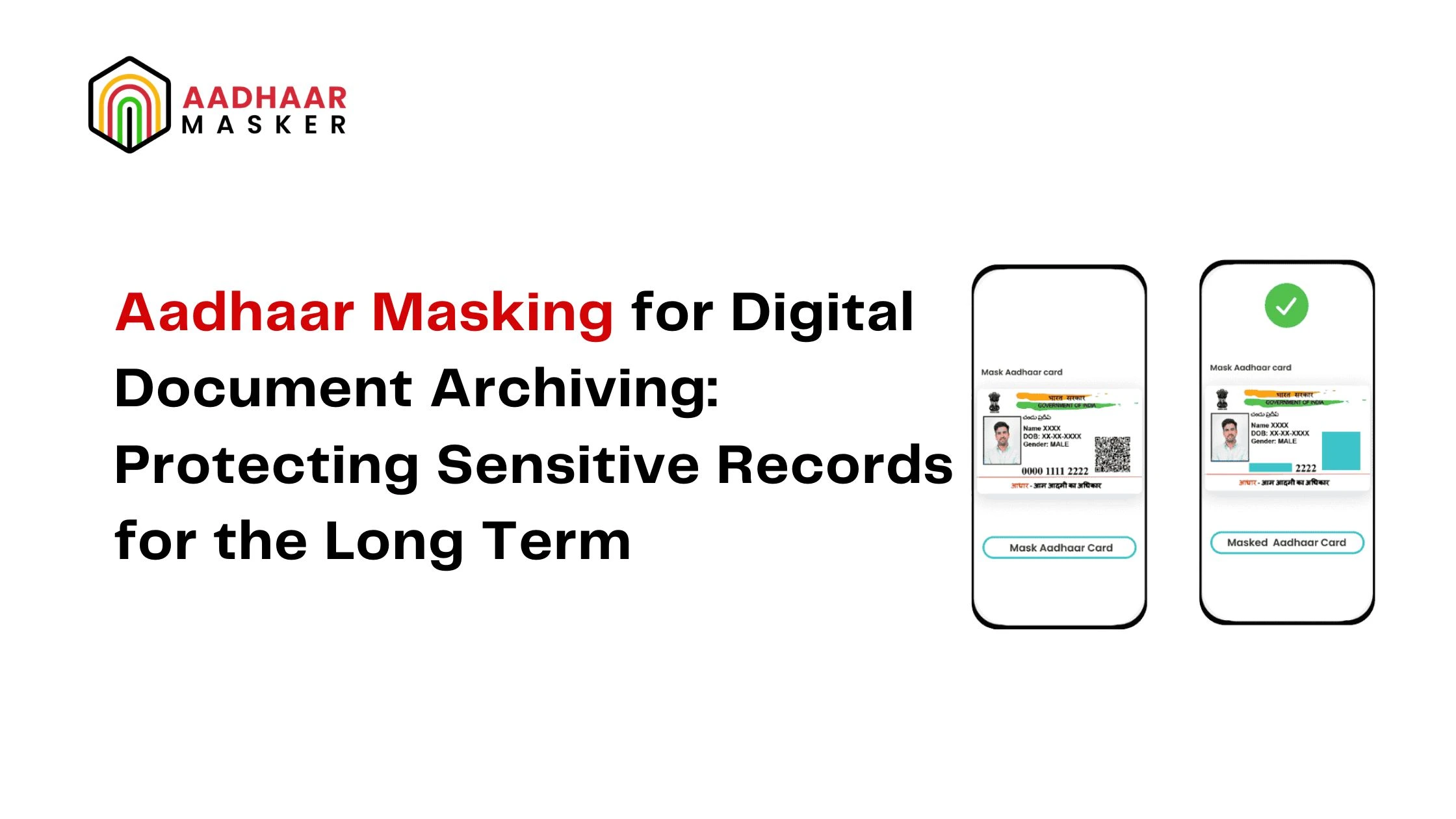
Organisations across banking, finance, insurance, healthcare and government store large volumes of identity documents for compliance and operations. However, keeping Aadhaar numbers and other personal information fully visible in long-term archives can increase privacy risks.
Aadhaar masking helps organisations protect archived documents by automatically hiding unnecessary Aadhaar information while retaining the data required for business and verification purposes. As businesses adopt Aadhaar privacy onboarding, digital identity verification and secure onboarding, automated masking is becoming an important part of privacy-focused document management.
What Is Aadhaar Masking for Digital Document Archiving?
Aadhaar masking is the process of automatically hiding or redacting unnecessary Aadhaar number information from digital documents.For example, instead of storing a complete Aadhaar number, an organisation may retain only the last four digits while masking the remaining digits. The exact masking approach depends on the organisation's operational and compliance requirements.
When applied to digital document archiving, Aadhaar masking helps ensure that sensitive identity information is not unnecessarily exposed throughout the document's storage lifecycle.AI-powered Aadhaar masking software can identify Aadhaar-related information in documents and automatically apply masking rules across large volumes of files.
For organisations looking to understand the broader implementation, security, AI and compliance considerations, The Complete Enterprise Guide to Aadhaar Masking: Implementation, Security, AI and Compliance provides a comprehensive overview of enterprise Aadhaar masking.
Why Is Aadhaar Masking Important for Long-Term Document Storage?
1. Archived Documents Remain Vulnerable
Documents stored in digital archives may remain accessible for many years. Even if they are no longer actively used, they can still be exposed through unauthorized access, improper permissions, accidental sharing, insecure downloads, internal misuse, data breaches, or compromised storage systems. By masking unnecessary Aadhaar information before archiving, organizations can significantly reduce the amount of sensitive data exposed if archived documents are accessed improperly.
2. Data Exposure Risk Increases Over Time
The longer sensitive information is stored, the greater the number of systems, users and processes that may interact with it. Archived documents may be migrated between storage platforms, accessed by different teams, or integrated with new systems.A privacy-first archiving strategy helps organisations minimise unnecessary exposure throughout this lifecycle.
3. Manual Masking Is Difficult to Scale
While manual redaction may be practical for a small number of documents, it becomes inefficient for organizations managing thousands or millions of identity records. Manual processes often lead to inconsistent masking, missed Aadhaar numbers, human errors, slower processing times, and higher operational costs. Automated Aadhaar masking provides a scalable alternative by applying consistent masking rules across high document volumes while improving efficiency and accuracy.
Who Can Benefit from Aadhaar Masking in Digital Archives?
Aadhaar masking benefits any organization that collects, verifies, processes, or stores identity documents. Banks and financial institutions can use it to protect archived KYC records and customer documents, while NBFCs and fintech companies can secure digital onboarding records after verification. Insurance providers can safeguard identity documents used during policy issuance, claims processing, and customer servicing. Healthcare organizations can protect patient identity records retained for administrative purposes, and government departments can improve the security of citizen records through automated privacy controls. Enterprises and service providers can also integrate Aadhaar masking into employee, vendor, and compliance document management to reduce long-term privacy risks.
How Does Aadhaar Masking Support Secure Onboarding?
Onboarding is one of the first stages where organizations collect personal identity information, making it essential to protect sensitive data from the beginning of the customer lifecycle. A secure onboarding strategy should define what identity information is collected, why it is required, who can access it, how long it should be retained, and how unnecessary information should be protected. Aadhaar masking supports this approach by automatically protecting identity documents once the required verification is complete. For example, an organization may use the complete Aadhaar document during identity verification but store only a masked version for long-term operational or archival purposes. This helps minimize unnecessary exposure of sensitive information while preserving the data needed for legitimate business processes.
What Are the Benefits of Aadhaar Masking for Digital Archives?
Aadhaar masking helps reduce the exposure of sensitive personal information by ensuring unnecessary Aadhaar details are no longer visible in archived documents. It strengthens privacy management by embedding protection directly into the document lifecycle instead of relying solely on access controls. AI-powered automation enables faster processing of high document volumes while applying consistent masking rules across departments and workflows. This reduces manual effort, improves operational efficiency, and supports privacy-first digital transformation as organizations continue moving paper records into secure digital archives.
Aadhaar Masking and Digital Identity Verification: How Do They Work Together?
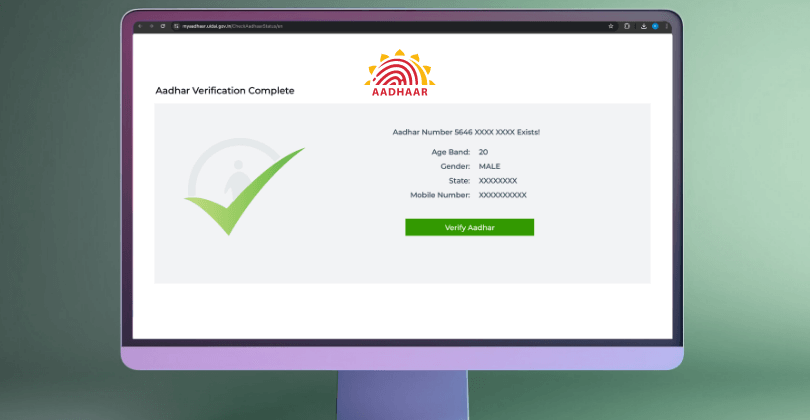
Digital identity verification confirms an individual's identity, while Aadhaar masking protects sensitive information once the verification process is complete. In a typical workflow, a customer submits an identity document, OCR or intelligent document processing extracts the required information, and the organization completes identity verification. Based on business and retention requirements, unnecessary Aadhaar information is then automatically masked before the protected document is securely archived. This approach enables organizations to maintain efficient verification workflows while reducing long-term exposure of sensitive identity data.
Best Practices for Protecting Aadhaar Information in Digital Archives
Organizations should adopt a privacy-first approach by retaining only the personal information required for legitimate business purposes. Aadhaar masking should be applied before documents enter long-term storage whenever the complete Aadhaar number is no longer necessary. Automating high-volume workflows improves consistency and reduces manual errors, while periodic reviews of legacy archives help identify and secure previously unmasked documents. Strong access controls should protect even masked records, and privacy measures should extend throughout the entire document lifecycle—from collection and onboarding to processing, storage, archival, retrieval, and secure deletion.
Choosing the right deployment model is equally important for ensuring security, scalability, and compliance. Learn how to evaluate cloud and on-premise deployment options in our guide, On-Premise vs Cloud Aadhaar Masking: Which Deployment Model Should Enterprises Choose?(sub 2)
Organizations adopting a Zero Trust approach can further strengthen document security by combining Aadhaar masking with continuous identity verification, least-privilege access, and strict access controls. Learn more in How Aadhaar Masking Supports Zero Trust Security Architecture.
The Future of Privacy-First Digital Document Archiving
As organisations continue to adopt digital onboarding, automated KYC and AI-powered document processing, the volume of identity information being collected and stored will continue to grow.
The future of document archiving will therefore require more than simply storing information securely. Organisations will need to determine what information is genuinely necessary, protect unnecessary data and automate privacy controls wherever possible.
Aadhaar masking can become an important part of this strategy. By integrating automated masking into onboarding, digital identity verification, document processing and archival workflows, organisations can reduce unnecessary exposure while improving operational efficiency.
Conclusion
Digital archives are designed to preserve information for the long term, but long-term storage should not mean long-term exposure to unnecessary personal information.
Aadhaar masking helps organisations protect identity documents by reducing the visibility of sensitive Aadhaar information before documents are archived or retained for future use. When combined with strong access controls, secure storage, data minimisation and automated document processing, it can support a more privacy-conscious approach to digital document management.
For organisations building Aadhaar privacy onboarding workflows, improving digital identity verification, or developing a secure onboarding strategy, automated Aadhaar masking can help create a more efficient and privacy-focused document lifecycle.
Protect Archived Aadhaar Documents with Automated Masking
Secure your digital archives with Pix Dynamics Aadhaar Masking. Automatically mask sensitive Aadhaar information before documents are stored, reducing long-term privacy risks while supporting secure onboarding, digital identity verification, and compliance workflows.
Request a Free Demo to see how Pix Dynamics helps you integrate automated Aadhaar masking into your document management and archival systems for scalable, privacy-first protection.



Top Posts
- What Is Aadhaar Masking for Digital Document Archiving?
- Why Is Aadhaar Masking Important for Long-Term Document Storage?
- Who Can Benefit from Aadhaar Masking in Digital Archives?
- How Does Aadhaar Masking Support Secure Onboarding?
- What Are the Benefits of Aadhaar Masking for Digital Archives?
- Aadhaar Masking and Digital Identity Verification: How Do They Work Together?
- Best Practices for Protecting Aadhaar Information in Digital Archives
- The Future of Privacy-First Digital Document Archiving
- Conclusion