
What Is Aadhaar Masking and Why Is It Important for Data Privacy?
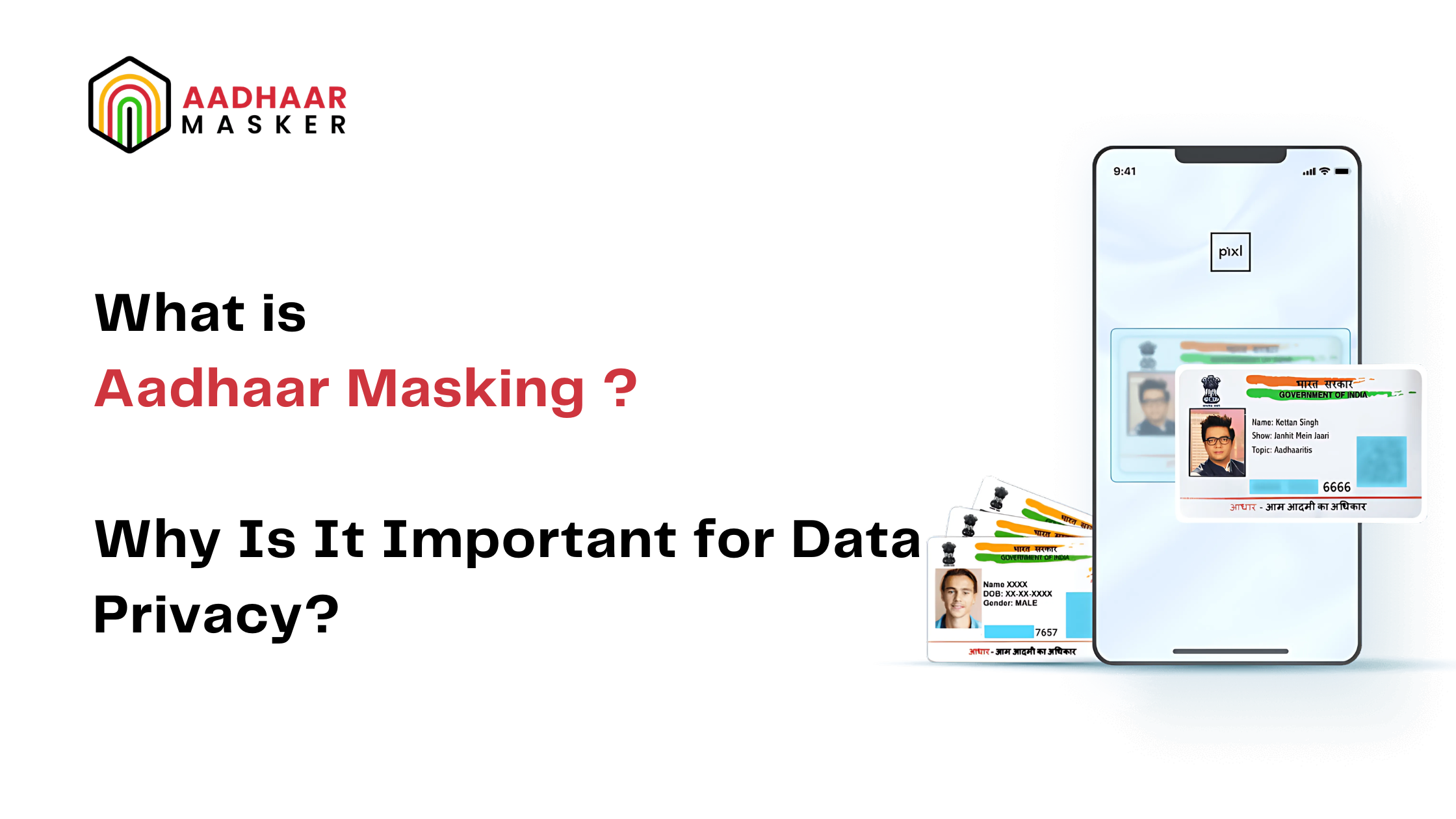
As digital services become an everyday part of banking, lending, insurance, telecom, and online verification processes, protecting personal information has become more important than ever. Aadhaar is one of the most commonly used identity documents in India, making it a valuable tool for verification but also a sensitive source of personal data.
Many people share Aadhaar copies while opening bank accounts, applying for loans, completing KYC procedures, or accessing various digital services. However, sharing a document that contains a full Aadhaar number can increase the risk of data misuse if it falls into the wrong hands.
This is where Aadhaar masking plays a critical role. By hiding sensitive Aadhaar details while preserving the document's identity verification value, Aadhaar masking helps individuals and organizations strengthen privacy and security.
In this guide, we'll explore what is Aadhaar masking, its importance for data protection, and why it has become a key part of modern identity verification practices.
What Is Aadhaar Masking?
Aadhaar masking is the process of concealing the first eight digits of an Aadhaar number while displaying only the last four digits.
For example:
Original Aadhaar Number: 1234 5678 9012
Masked Aadhaar Number: XXXX XXXX 9012
The masked version allows organizations to verify that the document belongs to the individual without exposing the complete Aadhaar number.
When people search for the masked Aadhaar meaning, they are essentially referring to an Aadhaar document where sensitive digits have been hidden to protect personal information while retaining its usability for many verification purposes.
A masked Aadhaar document contains the same identity details as a regular Aadhaar card but limits unnecessary exposure of the full Aadhaar number.
To gain a deeper understanding of Aadhaar masking, privacy requirements, compliance considerations, and secure document-sharing practices, explore our Complete Guide to Aadhaar Masking in 2026
Why Is Aadhaar Masking Important?
The growing use of digital onboarding and online identity verification has increased the volume of Aadhaar documents being shared electronically. Without proper safeguards, sensitive information can be exposed during document uploads, storage, processing, or sharing.
Protects Personal Information
Aadhaar numbers are unique identifiers linked to an individual's identity. Masking helps prevent unnecessary disclosure of this information.
Reduces Privacy Risks
When documents are shared with businesses, service providers, or internal teams, masking minimizes the amount of sensitive data visible to others.
Supports Safer Document Sharing
Individuals can often share masked Aadhaar copies when full Aadhaar visibility is not required, reducing potential privacy concerns.
Strengthens Data Security Practices
Organizations that use Aadhaar masking demonstrate a proactive approach to protecting customer information.
Builds Trust
Customers are increasingly aware of data privacy issues. Businesses that prioritize privacy protection are more likely to earn customer confidence.
These benefits make Aadhaar masking an important component of modern Aadhaar privacy strategies.
Who Uses Aadhaar Masking?
Aadhaar masking is useful for both individuals and organizations.
Individuals
People may use masked Aadhaar copies when submitting identity documents for verification purposes where a complete Aadhaar number is not necessary.
Banks and Financial Institutions
Banks often process large volumes of customer identity documents during onboarding and verification.
NBFCs and Fintech Companies
Digital lenders and financial technology platforms frequently use Aadhaar-based verification during customer onboarding.
Insurance Providers
Insurance companies collect identity documents during policy issuance and claims processing.
KYC Service Providers
Organizations offering OCR, document verification, and onboarding solutions often integrate Aadhaar masking into their workflows.
Enterprises Handling Customer Data
Any organization processing Aadhaar documents can benefit from implementing privacy-focused document handling practices.
When Should Aadhaar Masking Be Used?
A common misconception is that masking should only occur after a document has already been stored. In reality, the earlier masking is applied, the better.
During Digital Onboarding
When customers upload Aadhaar documents through websites or mobile applications.
During KYC Verification
Identity verification processes often require document review, making masking a useful privacy safeguard.
Before Internal Sharing
Documents circulated among departments should contain only the information necessary for business operations.
Before Third-Party Processing
If documents are shared with external vendors or service providers, masked versions can help reduce exposure.
During Long-Term Storage
Archived documents should also be protected to minimize future risks.
Where Is Aadhaar Masking Commonly Used?
Aadhaar masking has become increasingly common across industries that rely on digital identity verification.
Banking and Financial Services
Customer onboarding, account opening, lending, and KYC workflows frequently involve Aadhaar documents.
Fintech Applications
Digital-first platforms use Aadhaar verification to simplify onboarding processes.
Insurance Services
Identity verification is often required during policy issuance and claims management.
Telecom Services
Customer identity validation remains an important part of subscriber onboarding.
Government and Public Services
Various public-facing services require identity verification while prioritizing privacy protection.
Enterprise Document Processing
Organizations handling customer records often implement masking as part of broader privacy initiatives.
How Does Aadhaar Masking Work?
Modern Aadhaar masking solutions typically use automation to identify and protect sensitive information.
Step 1: Document Upload
The Aadhaar document is uploaded through a website, application, or verification platform.
Step 2: Document Detection
AI-powered systems identify whether the uploaded file contains Aadhaar information.
Step 3: Aadhaar Number Recognition
OCR technology extracts text from the document and locates the Aadhaar number.
Step 4: Automatic Masking
The first eight digits are replaced with masked characters while retaining the last four digits.
Step 5: Secure Storage and Processing
The masked version can then be stored, reviewed, or shared according to organizational policies.
Automation makes Aadhaar masking faster, more accurate, and scalable for high-volume onboarding environments.
If you'd like to explore the complete AI-powered masking workflow in greater detail, read How to Mask Aadhaar Number Automatically Using AI
Benefits of Aadhaar Masking for Organizations
Organizations that implement Aadhaar masking can gain several operational and security advantages.
Enhanced Data Privacy
Sensitive information remains protected throughout document workflows.
Reduced Exposure Risks
Employees and third parties view only the information necessary for their roles.
Improved Customer Trust
Customers feel more confident sharing documents with organizations that prioritize privacy.
Better Security Controls
Masking complements encryption, access management, and audit logging practices.
Scalable Digital Onboarding
Automated masking solutions support high-volume customer onboarding without increasing manual effort.
Common Misconceptions About Masked Aadhaar
Myth 1: A Masked Aadhaar Is Not Valid
A masked Aadhaar is an official Aadhaar document that conceals sensitive digits while retaining identity information.
Myth 2: Masking Removes Identity Verification Value
The document continues to provide key identity details necessary for many verification purposes.
Myth 3: Aadhaar Masking Is Only for Large Enterprises
Organizations of all sizes can benefit from protecting customer data during onboarding and verification processes.
Myth 4: Manual Masking Is Enough
Manual processes can be slow and prone to errors. Automated masking solutions provide greater consistency and efficiency.
Conclusion
Understanding what is Aadhaar masking is becoming increasingly important in today's digital-first environment. As organizations collect and process growing volumes of identity data, protecting sensitive information must remain a priority.
Aadhaar masking offers a simple yet effective way to strengthen Aadhaar privacy, reduce unnecessary data exposure, and improve trust in digital onboarding and verification processes. Whether used by individuals, banks, fintech companies, insurers, or KYC providers, masking helps balance identity verification needs with modern privacy expectations.
As digital services continue to evolve, Aadhaar masking will remain an essential component of secure and responsible identity management.


Top Posts
- What Is Aadhaar Masking and Why Is It Important for Data Privacy?
- What Is Aadhaar Masking?
- Why Is Aadhaar Masking Important?
- Who Uses Aadhaar Masking?
- When Should Aadhaar Masking Be Used?
- Where Is Aadhaar Masking Commonly Used?
- How Does Aadhaar Masking Work?
- Benefits of Aadhaar Masking for Organizations
- Common Misconceptions About Masked Aadhaar
- Conclusion