
How to Mask an Aadhaar Number Automatically Using AI?
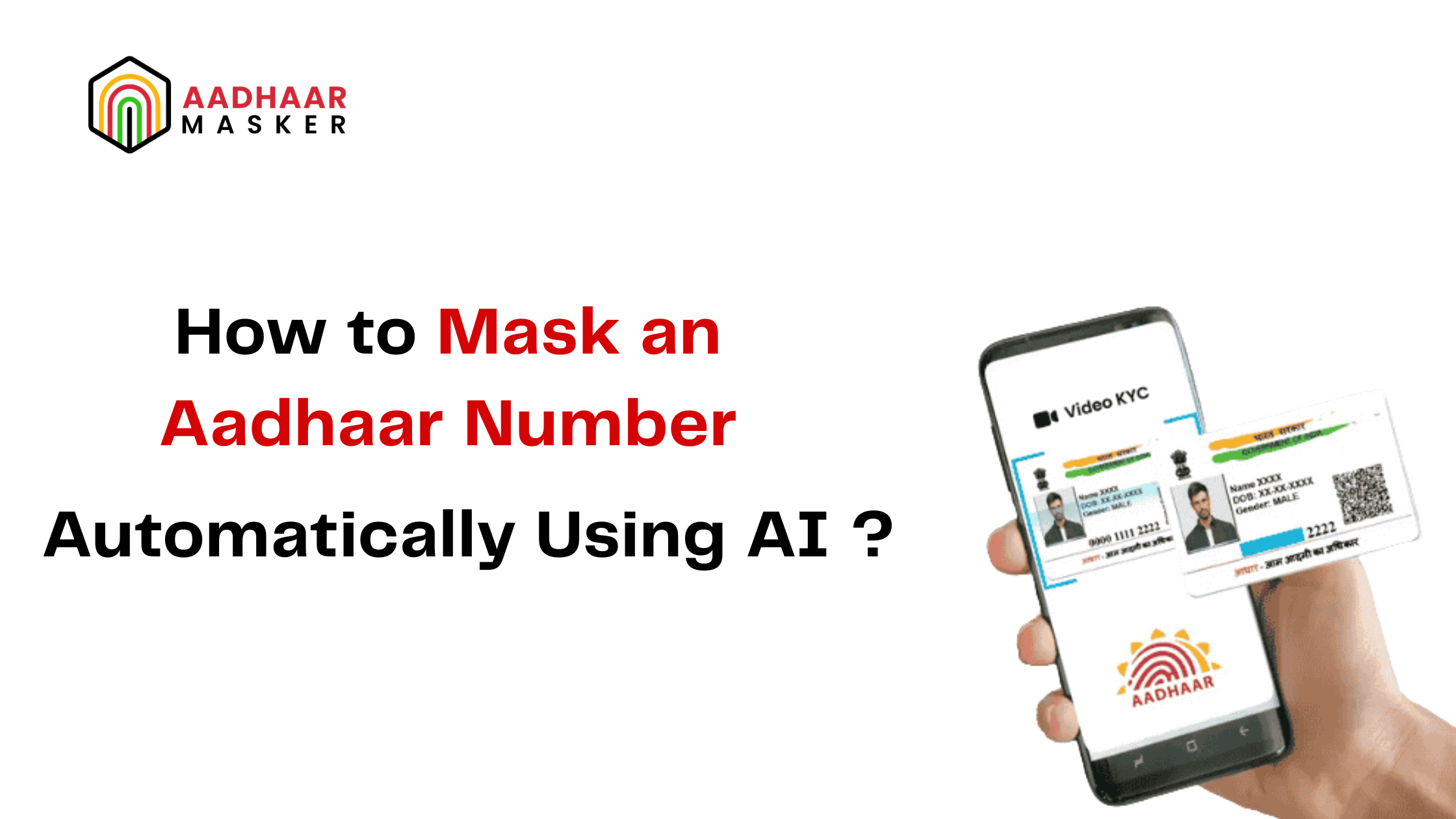
How much time does your organization spend manually masking Aadhaar numbers across customer documents?
Whether it's customer onboarding, KYC verification, loan processing, insurance enrollment, or employee verification, organizations handle large volumes of Aadhaar documents every day. Manually identifying and masking Aadhaar numbers is not only time-consuming but also increases the risk of human errors, compliance issues, and accidental exposure of sensitive information.
This is where AI Aadhaar masking comes in.
Modern Aadhaar masking software uses AI and OCR technology to automatically detect Aadhaar numbers in images, PDFs, and scanned documents and perform automatic Aadhaar redaction in real time. This helps organizations improve privacy protection, reduce processing time, and securely handle Aadhaar documents at scale.
In this guide, you'll learn:
- *What AI powered Aadhaar masking is
- *Why businesses are adopting automated masking
- *Who needs Aadhaar masking solutions
- *Where automated masking is used
- *When organizations should implement it
- *How AI automatically masks Aadhaar numbers at scale
What Is AI-Powered Aadhaar Masking?
AI powered Aadhaar masking is the process of automatically detecting and concealing Aadhaar numbers within documents using Artificial Intelligence and OCR technology.
Instead of manually reviewing documents and redacting Aadhaar information, the system automatically identifies Aadhaar numbers and masks sensitive digits.
Example
Original Aadhaar Number
1234 5678 9012
Masked Aadhaar Number:
XXXX XXXX 9012
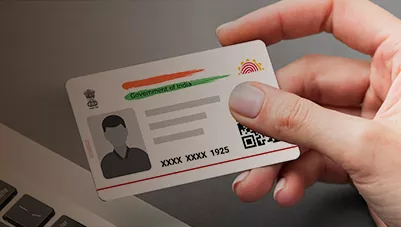
The masking process preserves other essential information such as:
- *Name
- *Photograph
- *Gender
- *Address
- *QR Code
- *Verification details
This allows organizations to verify identity while protecting sensitive Aadhaar information.
Why Is Automated Aadhaar Masking Important?
Organizations today process Aadhaar documents across multiple workflows, including:
- *Customer onboarding
- *Video KYC
- *Digital KYC
- *Employee onboarding
- *Vendor verification
- *Banking applications
- *Insurance enrollment
- *Telecom registration
Manually masking Aadhaar numbers creates several challenges:
Human Errors
Employees may overlook Aadhaar numbers hidden within scanned images, PDFs, or low quality documents.
Slow Processing
Manual review significantly increases onboarding and verification time.
Compliance Risks
Unmasked Aadhaar numbers may be stored, shared, or processed unintentionally.
Scalability Challenges
Organizations handling thousands of documents daily cannot efficiently rely on manual redaction.
AI eliminates these challenges by automating detection and masking with high accuracy and speed.
For a deeper understanding of Aadhaar masking, including privacy protection, compliance considerations, secure document sharing, and real-world business applications, explore our Complete Guide to Aadhaar Masking in 2026
Who Needs AI-Powered Aadhaar Masking?
Automated Aadhaar masking is valuable for any organization that handles Aadhaar documents.
Banks and Financial Institutions
Banks process Aadhaar documents during:
- *Account opening
- *Loan applications
- *KYC verification
- *Customer onboarding
NBFCs and Fintech Companies
Fintech platforms frequently collect Aadhaar documents during digital onboarding and identity verification.
Insurance Providers
Insurance companies process Aadhaar documents during policy issuance and customer verification.
Telecom Operators
Telecom providers often require identity verification during SIM activation and customer onboarding.
Enterprises and HR Departments
Organizations collect Aadhaar documents for:
- *Employee onboarding
- *Contractor verification
- *Vendor registration
Government and Public Sector Organizations
Public sector entities often process large volumes of citizen identity documents and benefit from automated privacy protection.
If you're in the banking, NBFC, or fintech sector, discover the recommended implementation strategies, privacy controls, and operational guidelines in Aadhaar Masking Best Practices for BFSI, NBFCs and Fintech Companies.
Where Is AI-Based Aadhaar Masking Used?
AI powered Aadhaar masking can be implemented across various document workflows.
Digital KYC Platforms
Identity verification platforms use automated masking to protect sensitive customer information.
Customer Onboarding Systems
Organizations integrate Aadhaar masking into onboarding workflows before documents enter storage systems.
Document Management Systems
Enterprises automatically mask Aadhaar information before archiving documents.
CRM and Verification Platforms
Customer records containing Aadhaar documents can be automatically sanitized before internal sharing.
Legacy Document Repositories
Organizations often use AI to identify and mask Aadhaar numbers within existing document archives.
When Should Organizations Use Automated Aadhaar Masking?
Organizations should implement automated Aadhaar masking whenever Aadhaar documents are:
- *Collected
- *Processed
- *Shared
- *Stored
- *Archived
- *Migrated
The earlier Aadhaar masking occurs in the document lifecycle, the lower the privacy and compliance risks.
Many organizations now adopt a "mask first" approach where Aadhaar numbers are automatically masked immediately after document capture.
How Does AI Automatically Mask Aadhaar Numbers?
Understanding how AI works helps organizations evaluate the effectiveness of modern Aadhaar masking solutions.
Step 1: Document Ingestion
The system receives:
- *Scanned Aadhaar cards
- *PDFs
- *Images
- *Mobile uploads
- *Digital documents
Step 2: OCR Extraction
Advanced OCR technology extracts text from the document.
This includes:
- *Aadhaar numbers
- *Names
- *Addresses
- *Other document information
Even low quality scans can be processed using AI enhanced OCR models.
Step 3: Aadhaar Detection
AI algorithms identify Aadhaar numbers based on:
- *Contextual information
- *Number patterns
- *Document structure
- *Aadhaar specific layouts
This reduces false detections and improves accuracy.
Step 4: Automatic Masking
Once detected, the Aadhaar number is automatically masked.
Example:
1234 5678 9012
becomes
XXXX XXXX 9012
The masking process is applied consistently across all document formats.
Step 5: Quality Validation
Advanced systems perform validation checks to ensure:
- *Aadhaar numbers are correctly detected
- *Masking is applied accurately
- *No sensitive information remains exposed
Step 6: Secure Output Generation
The masked document is generated and made available for storage, sharing, or further processing.
How AI Improves Aadhaar Privacy and Compliance?
AI powered Aadhaar masking supports modern privacy first business practices.
Reduced Data Exposure
Sensitive Aadhaar numbers are hidden before documents are stored or shared.
Stronger Privacy Controls
Organizations limit access to personally identifiable information (PII).
Faster Processing
Automated workflows eliminate manual review bottlenecks.
Improved Accuracy
AI consistently applies masking rules across large document volumes.
Better Audit Readiness
Organizations can demonstrate secure handling of Aadhaar information during audits and compliance reviews.
Key Features to Look for in an Aadhaar Masking Solution
When selecting an Aadhaar masking platform, organizations should evaluate:
- *AI powered Aadhaar detection
- *OCR based text extraction
- *Real time masking
- *Batch processing
- *Legacy document masking
- *API integration capabilities
- *Cloud deployment
- *On premise deployment
- *Audit logging
- *High processing accuracy
Choosing the right solution helps organizations scale privacy protection across the enterprise.
Frequently Asked Questions
What is Aadhaar masking?
Aadhaar masking is the process of hiding sensitive digits of an Aadhaar number while retaining the information needed for identity verification.
Can AI automatically detect Aadhaar numbers?
Yes. AI combined with OCR technology can automatically identify Aadhaar numbers in images, PDFs, and scanned documents.
Why is automated Aadhaar masking better than manual masking?
Automated masking is faster, more accurate, scalable, and reduces the risk of human error.
Can AI mask Aadhaar numbers in bulk documents?
Yes. Modern Aadhaar masking solutions support batch and bulk document processing.
Is AI-powered Aadhaar masking suitable for KYC workflows?
Yes. Many banks, fintech companies, insurers, and onboarding platforms use automated Aadhaar masking to protect customer information during KYC and verification processes.
Conclusion
As organizations handle increasing volumes of Aadhaar documents, manual masking is becoming inefficient, costly, and difficult to scale.
AI-powered Aadhaar masking offers a smarter approach by automatically detecting and masking Aadhaar numbers across images, PDFs, scanned documents, and onboarding workflows. It helps organizations improve privacy protection, streamline document processing, reduce compliance risks, and enhance operational efficiency.
For businesses focused on secure customer onboarding, digital KYC, identity verification, and privacy first document management, automated Aadhaar masking is no longer a luxury, it is becoming a critical component of modern document processing and data protection strategies.
Automate Aadhaar Masking Before Privacy Risks Become Compliance Issues
Still relying on manual Aadhaar redaction? Eliminate human errors, accelerate customer onboarding, and protect sensitive identity data with AI-powered Aadhaar masking. Automatically detect and mask Aadhaar numbers across PDFs, scanned documents, images, and KYC documents in real time while ensuring faster processing and stronger privacy controls.
Book a demo today to see how automated Aadhaar masking can streamline your document workflows and strengthen data protection at scale.


Top Posts
- What Is AI-Powered Aadhaar Masking?
- Why Is Automated Aadhaar Masking Important?
- Who Needs AI-Powered Aadhaar Masking?
- Where Is AI-Based Aadhaar Masking Used?
- When Should Organizations Use Automated Aadhaar Masking?
- How Does AI Automatically Mask Aadhaar Numbers?
- How AI Improves Aadhaar Privacy and Compliance?
- Key Features to Look for in an Aadhaar Masking Solution
- Frequently Asked Questions
- Conclusion