Virtual ID (VID) vs Masked Aadhaar: Which Should Your Business Accept?
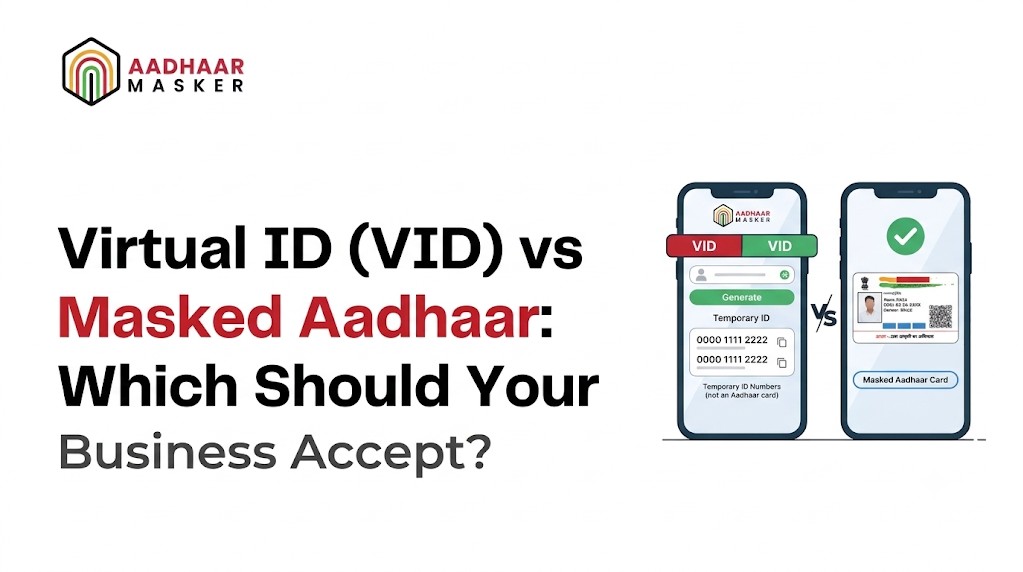
When a customer shares Aadhaar details with your business, the full 12-digit Aadhaar number is no longer the only option. UIDAI has introduced two privacy-friendly alternatives that let people prove their identity without exposing their complete number: the Virtual ID (VID) and the masked Aadhaar. Both are designed to reduce misuse of Aadhaar data, but they work in very different ways and suit very different business processes.
This guide on virtual id vs masked aadhaar explains what each option is, what information it hides, how it fits into verification and KYC workflows, and which one your business should accept. It also covers where an aadhaar verification api and an API solution for Aadhaar card masking solutions fit into a compliant onboarding process.
What Is a Virtual ID (VID)?
A Virtual ID is a temporary, revocable 16-digit number that is mapped to an individual's Aadhaar number. It can be used in place of the Aadhaar number for authentication and e-KYC, so the resident never has to reveal the real 12-digit number to a service provider.
Key characteristics of a VID include:
- Generated by the resident: Only the Aadhaar holder can create a VID, through the UIDAI website, the mAadhaar app or an SMS request to UIDAI.
- Temporary and replaceable: A VID stays valid until the resident generates a new one, and the old VID stops working at that point.
- Not reversible: The Aadhaar number cannot be derived from the VID, so a leaked VID does not expose the underlying Aadhaar number.
- Works with OTP and biometric authentication: Businesses that are authorised by UIDAI can authenticate a VID in the same way as an Aadhaar number.
In short, a VID is a digital identifier built for online authentication. It is not a document and does not appear on the physical Aadhaar card.
What Is Masked Aadhaar?
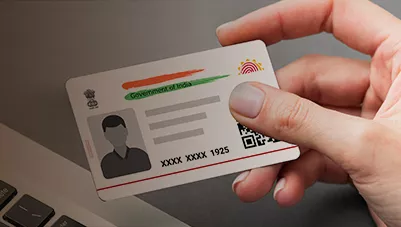
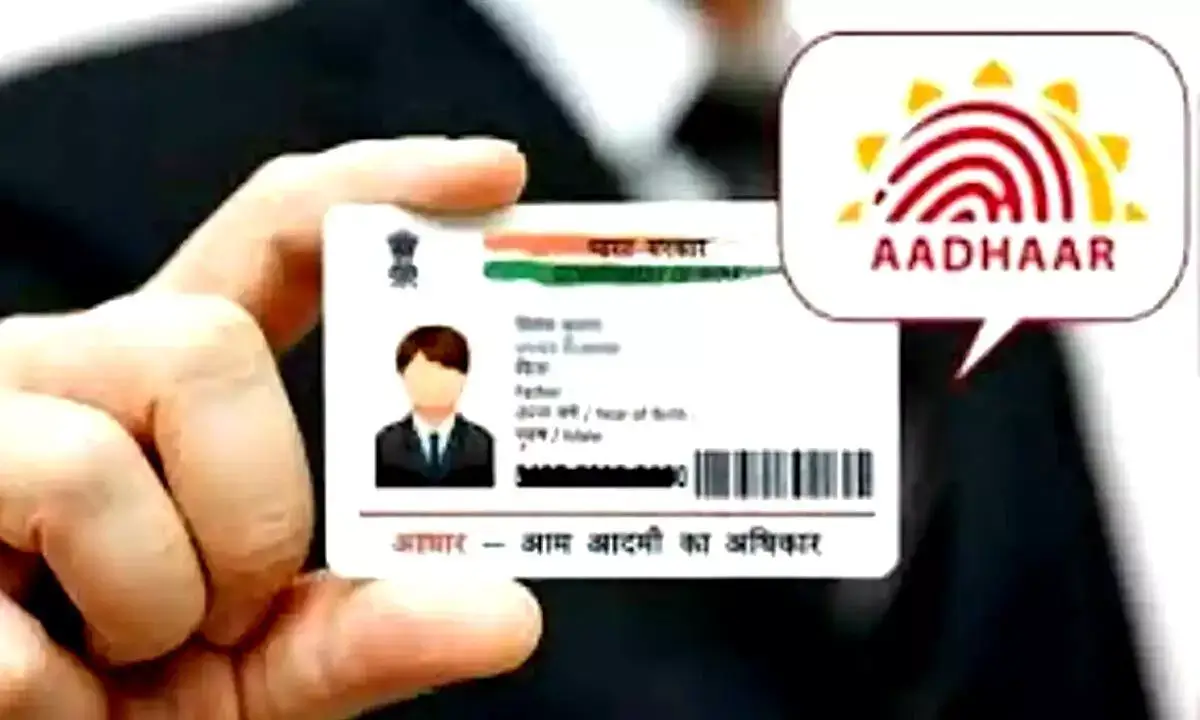
Masked Aadhaar is a version of the Aadhaar document in which the first eight digits of the Aadhaar number are hidden and only the last four digits are visible. Residents can download a masked e-Aadhaar directly from UIDAI, and businesses can create masked copies of documents they receive using masking software.
Key characteristics of masked Aadhaar include:
- A document, not a number: It still shows the name, photograph, date of birth, gender, address and a secure QR code.
- Partial number only: Just the last four digits are displayed, which is enough to match records but not enough to misuse the full number.
- Offline verification: The digitally signed QR code on e-Aadhaar can be scanned to confirm that the details are genuine and issued by UIDAI.
- Widely accepted: UIDAI recognises masked Aadhaar as a valid proof of identity for most purposes.
If you want a deeper look at how a masked copy compares with the full document, read our guide on masked Aadhaar vs regular Aadhaar.
Virtual ID vs Masked Aadhaar: Key Differences
Although both options protect the Aadhaar number, they solve different problems. The table below summarises the main differences.
| Factor | Virtual ID (VID) | Masked Aadhaar |
|---|---|---|
| Format | 16-digit number | Document image or PDF |
| What it hides | The entire Aadhaar number | The first eight digits of the Aadhaar number |
| What it shows | No demographic details on its own | Name, photo, date of birth, gender, address and last four digits |
| Primary use | Online authentication and e-KYC | Proof of identity and address, offline verification |
| Verification method | OTP or biometric authentication through UIDAI | QR code scan or document review |
| Who creates it | Only the resident | The resident or the business, through masking |
| Validity | Until the resident generates a new VID | Valid as long as the Aadhaar details are current |
| Storage risk | Low, as it can be replaced at any time | Low, as the full number is not visible |
The simplest way to remember the difference is this: a VID replaces the Aadhaar number during authentication, while masked Aadhaar replaces the full Aadhaar document during collection and storage.
When Your Business Should Accept a VID
A VID is the better choice when your process relies on real-time digital authentication. Common scenarios include:
- Digital onboarding: Banks, NBFCs, fintech apps and insurers that run OTP-based e-KYC can ask customers to enter a VID instead of their Aadhaar number.
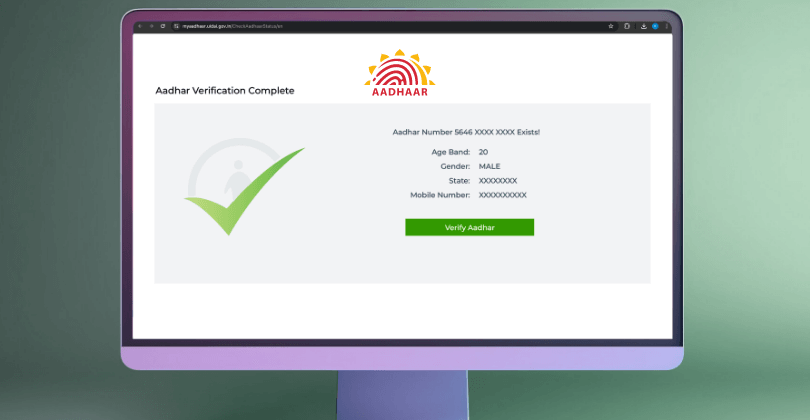
- Authentication through an Aadhaar verification API: If you integrate an aadhaar verification api through an authorised partner, accepting VID input reduces the amount of sensitive data that passes through your systems.
- Privacy-conscious customers: Offering VID as an option builds trust because customers know their actual Aadhaar number never reaches your servers.
Keep in mind that only entities authorised under the Aadhaar Act, such as registered authentication user agencies, can perform Aadhaar authentication. Most businesses access this capability through a licensed provider. Also note that a VID alone does not prove anything. It only becomes useful once it is authenticated against UIDAI records.
When Your Business Should Accept Masked Aadhaar
Masked Aadhaar is the better choice when you need a document as evidence or when your process involves storing identity proofs. Typical scenarios include:
- Offline and assisted KYC: Branch onboarding, field agent visits, rental agreements and hotel check-ins often need a physical or scanned identity proof.
- Employee and vendor onboarding: HR and procurement teams collect Aadhaar copies for background checks and records, and masked copies are sufficient for these purposes.
- Address proof: A masked Aadhaar still shows the full address, which a VID does not provide.
- Long-term record keeping: If you must retain copies of identity documents for audits, storing only masked versions greatly reduces your exposure in a data breach.
UIDAI guidelines require that businesses storing Aadhaar copies mask the first eight digits. The Digital Personal Data Protection Act also expects data fiduciaries to collect only what they need. Accepting masked Aadhaar at the point of collection helps you meet both expectations.
The Practical Answer: Accept Both, Store Only What You Need
For most organisations, the virtual id vs masked aadhaar question is not an either-or decision. The strongest approach combines the two:
- Authenticate with VID where possible. Let customers enter a VID in your digital KYC journey, and verify it through an authorised Aadhaar verification API.
- Collect masked Aadhaar for document proof. When a document is required, ask for a masked e-Aadhaar and verify its QR code.
- Mask anything that arrives unmasked. Customers will still upload full Aadhaar copies by mistake. Run every upload through automatic masking before it is stored.
- Never store the full Aadhaar number. Keep only reference tokens, the last four digits or masked images in your databases and document systems.
This layered model gives customers flexibility, keeps your onboarding fast and ensures that full Aadhaar numbers never sit in your systems.
Why You Still Need an API Solution for Aadhaar Card Masking
Even if you promote VID and masked Aadhaar, you cannot control what every customer, employee or partner sends you. Full Aadhaar copies arrive through email attachments, mobile uploads, scanned loan files and legacy archives. Manual masking is slow and error-prone, and a single missed document becomes a compliance risk.
An API solution for Aadhaar card masking solutions closes this gap. A good masking API should:
- Detect the Aadhaar number automatically on cards, e-Aadhaar PDFs, photos and scans
- Mask the first eight digits and the QR code in a single call
- Handle rotated, blurred and low-quality images accurately
- Support both real-time uploads and bulk processing of historical files
- Process documents securely without keeping the original files
- Provide audit logs that help you demonstrate compliance
When the masking API sits right after your verification step, every document is cleaned before it reaches storage, whether the customer used a VID, a masked Aadhaar or a full copy.
Common Mistakes to Avoid
- Treating a VID as proof of identity without authenticating it through UIDAI
- Storing VIDs alongside full Aadhaar copies, which defeats the purpose of both
- Rejecting masked Aadhaar and insisting on a full copy when it is not legally required
- Masking the digits but leaving the QR code readable
- Relying on staff to manually mask documents at high volumes
Conclusion
Virtual ID and masked Aadhaar both protect the Aadhaar number, but they serve different needs. A VID is ideal for online authentication and e-KYC through an authorised Aadhaar verification API. Masked Aadhaar is ideal when you need a document for identity or address proof and must keep it on record. The smartest businesses accept both. They authenticate with VID where they can, collect masked documents where they must and use automated masking to make sure no full Aadhaar number is ever stored.
Make Every Aadhaar Copy Compliant Automatically
Our Aadhaar masking platform helps businesses protect identity data at every stage of onboarding and storage.
- Accurate detection on cards, e-Aadhaar PDFs, mAadhaar screenshots and mobile photos
- Automatic masking of the first eight digits and the QR code
- Real-time Aadhaar Masking API that fits right after your verification step
- Bulk processing to clean up historical document archives
- Cloud and on-premise deployment with no persistent storage of originals
Request a Personalized Demo and see how easily you can make every Aadhaar document compliant.