
Masked Aadhaar vs Regular Aadhaar: Key Differences Explained
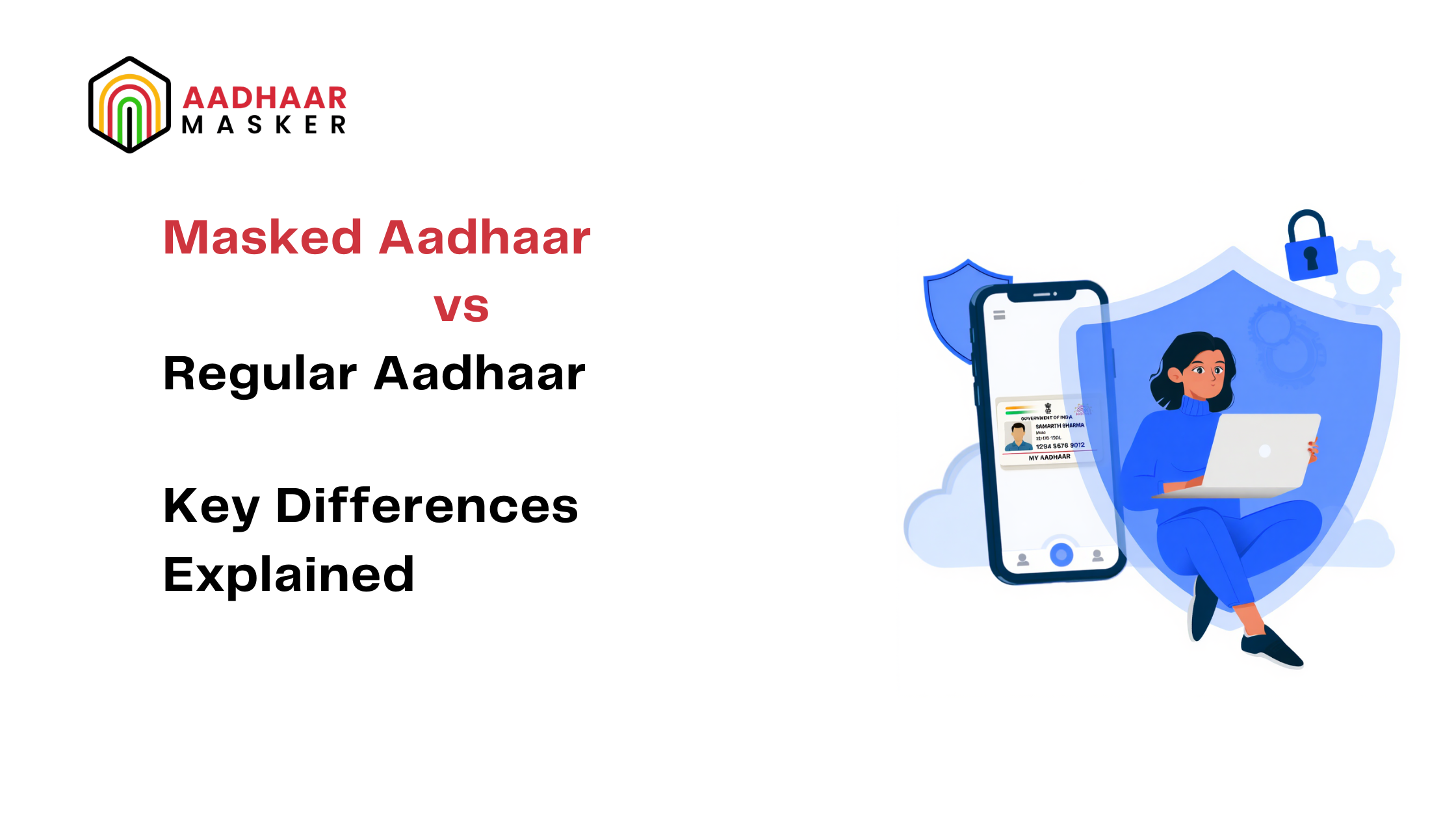
Aadhaar has become one of the most important identity documents in India. Whether you're opening a bank account, completing KYC verification, applying for a loan, purchasing insurance, or accessing digital services, Aadhaar is often part of the process.
As concerns around data privacy continue to grow, many individuals and organizations are looking for safer ways to share identity documents. This has led to increasing awareness of Masked Aadhaar and its role in protecting sensitive information.
However, many people still wonder: What is the difference between a Masked Aadhaar and a Regular Aadhaar? Which one should be used during identity verification? And how does Aadhaar masking improve privacy?
In this guide, we'll break down the key differences between the two documents and explain why Aadhaar masking has become an important part of modern identity verification.
What Is the Difference Between Masked Aadhaar and Regular Aadhaar?
The primary difference lies in how the Aadhaar number is displayed.
Regular Aadhaar
A Regular Aadhaar document displays the complete 12-digit Aadhaar number.
Example:
1234 5678 9012
Anyone viewing the document can see the full Aadhaar number.
Masked Aadhaar
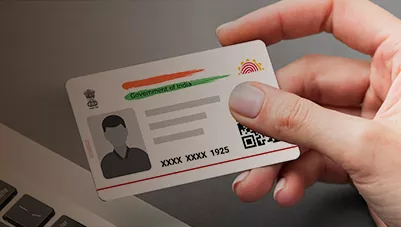
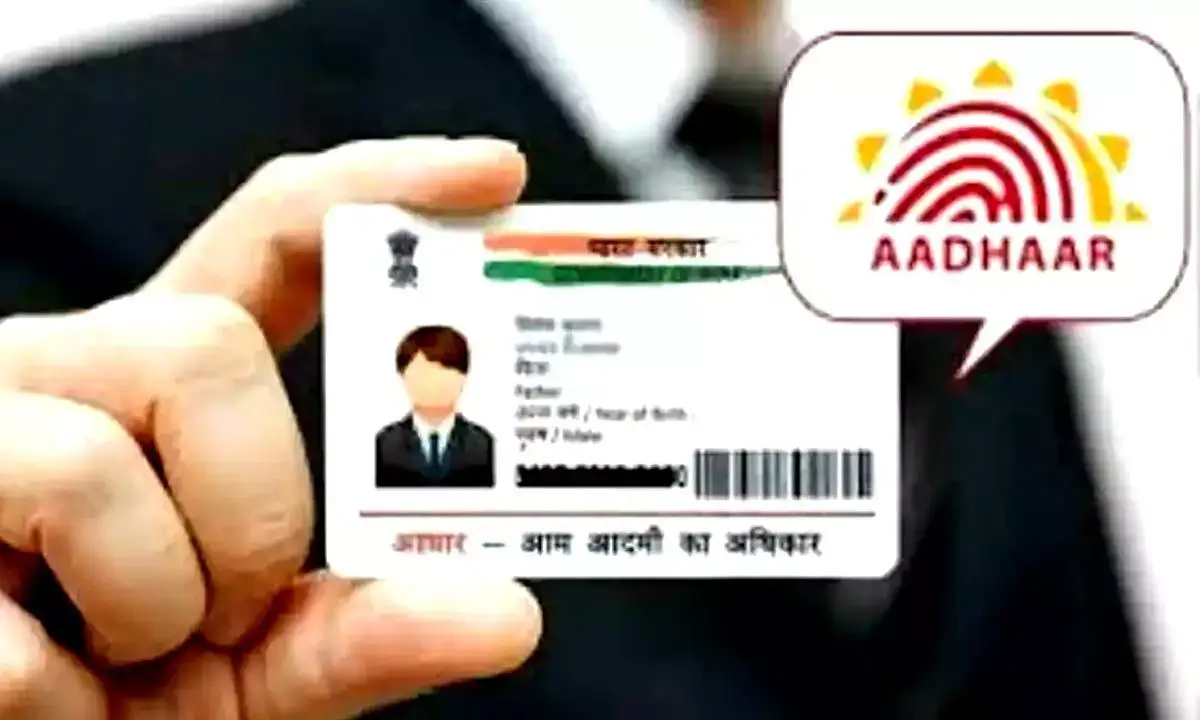
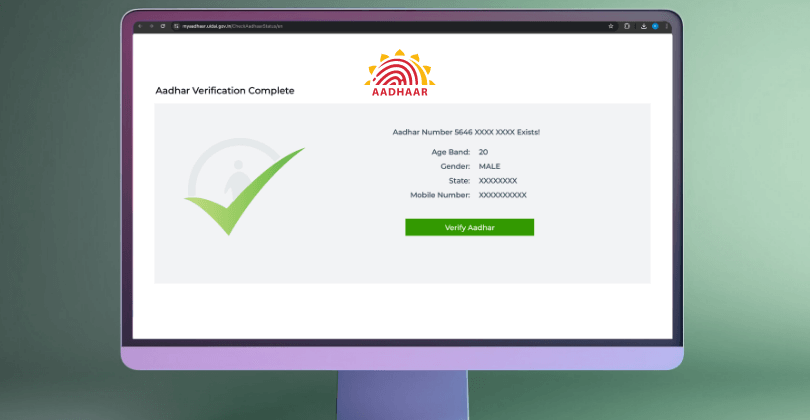
A Masked Aadhaar document hides the first eight digits and displays only the last four digits.
Example:
XXXX XXXX 9012
This allows the document holder to share identity information while reducing unnecessary exposure of sensitive data.
When people search for masked Aadhaar vs regular Aadhaar, they are essentially comparing two versions of the same identity document with different levels of privacy protection.
Why Was Masked Aadhaar Introduced?
As digital transactions and online verification processes increased, so did concerns about identity theft, unauthorized access, and misuse of personal information.
Masked Aadhaar was introduced to help individuals:
- *Protect sensitive identity information
- *Share documents more safely
- *Reduce unnecessary exposure of Aadhaar numbers
- *Support privacy-focused verification processes
- *Improve confidence in digital onboarding
The goal is simple: provide identity verification while minimizing privacy risks.
For a comprehensive overview of Aadhaar masking, covering privacy, compliance, secure document handling, and real-world use cases, read our Complete Guide to Aadhaar Masking in 2026
Who Should Use Masked Aadhaar?
Masked Aadhaar can be useful for a wide range of users and organizations.
Individual Users
People sharing Aadhaar documents for customer onboarding, registration, verification, or account creation may prefer masked versions when full Aadhaar visibility is not required.
Banks and Financial Institutions
Banks often process large volumes of identity documents and can use masking to reduce data exposure during internal workflows.
NBFCs and Fintech Companies
Digital lenders and fintech platforms increasingly focus on privacy-first onboarding experiences.
Insurance Providers
Policy issuance and customer verification processes can benefit from reduced exposure of sensitive identity information.
KYC and Verification Service Providers
Organizations handling identity verification can integrate Aadhaar masking into their document processing workflows.
When Should You Use Masked Aadhaar Instead of Regular Aadhaar?
The answer depends on the purpose of verification and the information required.
Use Masked Aadhaar When:
- Identity confirmation is needed
- Full Aadhaar visibility is unnecessary
- Documents are shared digitally
- Privacy protection is a priority
- Organizations want to reduce data exposure
Use Regular Aadhaar When:
- Full Aadhaar information is specifically required
- Certain verification workflows require complete Aadhaar details
- Authorized processes mandate visibility of the full Aadhaar number
Organizations should always evaluate their verification requirements before requesting identity documents.
If you're wondering whether a masked Aadhaar can be used for verification and where it is accepted, Explore Is Masked Aadhaar Valid? Where Can You Use It Legally?
Where Are Masked and Regular Aadhaar Commonly Used?
Banking
Both document types may be used during customer onboarding and verification, depending on process requirements.
Lending Platforms
NBFCs and fintech companies often incorporate privacy focused document handling into their onboarding systems.
Insurance Services
Identity verification remains an important part of policy issuance and claims management.
Digital KYC Workflows
Many digital onboarding systems now prioritize privacy enhancing measures such as Aadhaar masking.
Enterprise Verification Systems
Organizations handling customer documents often implement masking to improve privacy controls.
How Does Masked Aadhaar Improve Privacy?
The biggest advantage of Masked Aadhaar is that it limits unnecessary visibility of sensitive information.
Reduces Exposure Risks
Fewer people have access to the complete Aadhaar number.
Supports Secure Aadhaar Sharing
Customers can share identity documents with greater confidence when sensitive information is protected.
Strengthens Data Protection Practices
Organizations can reduce privacy risks by ensuring only authorized personnel access complete Aadhaar information.
Minimizes Internal Visibility
Many employees involved in onboarding or verification processes do not require access to the full Aadhaar number.
Enhances Customer Trust
Privacy-conscious customers increasingly expect organizations to handle personal information responsibly.
These advantages make Masked Aadhaar an important tool for secure Aadhaar sharing in digital environments.
Aadhaar Privacy Comparison: Masked Aadhaar vs Regular Aadhaar
| Feature | Masked Aadhaar | Regular Aadhaar |
|---|---|---|
| Displays Full Aadhaar Number | No | Yes |
| Shows Last Four Digits | Yes | Yes |
| Identity Verification Support | Yes | Yes |
| Privacy Protection | High | Standard |
| Risk of Unnecessary Exposure | Lower | Higher |
| Suitable for Secure Sharing | Yes | Depends on Requirement |
| Digital Onboarding Friendliness | High | Moderate |
| Customer Privacy Focus | Strong | Limited |
This Aadhaar privacy comparison clearly shows that Masked Aadhaar offers stronger protection against unnecessary exposure while still retaining its value as an identity document.
Common Misconceptions About Masked Aadhaar
Myth 1: Masked Aadhaar Is a Different Document
Masked Aadhaar is not a separate identity document. It is simply a privacy-enhanced version of Aadhaar where sensitive digits are hidden.
Myth 2: Masked Aadhaar Cannot Be Used for Verification
In many situations, identity verification can still be performed using a masked Aadhaar document.
Myth 3: Aadhaar Masking Reduces Security
The opposite is true. Masking is designed to improve privacy and reduce unnecessary data exposure.
Myth 4: Only Large Organizations Need Aadhaar Masking
Any organization handling customer identity documents can benefit from stronger privacy controls.
Benefits of Using Masked Aadhaar for Digital Onboarding
Organizations increasingly adopt Aadhaar masking because it offers practical advantages.
Better Privacy Protection
Sensitive information remains protected throughout onboarding workflows.
Reduced Data Exposure
Employees and third parties see only the information necessary for their role.
Improved Customer Confidence
Customers appreciate businesses that prioritize privacy and responsible data handling.
Stronger Security Frameworks
Masking complements access controls, encryption, audit logging, and other security measures.
More Privacy-Conscious Onboarding
Organizations can balance verification requirements with modern privacy expectations.
Conclusion
The debate around masked Aadhaar vs regular Aadhaar is ultimately about balancing identity verification with privacy protection. While both documents contain the same identity information, Masked Aadhaar offers an additional layer of security by concealing most of the Aadhaar number.
As businesses continue to digitize customer onboarding and verification processes, protecting personal information becomes increasingly important. Through stronger privacy controls, reduced data exposure, and safer document handling practices, Masked Aadhaar supports a more secure approach to identity verification.
For individuals and organizations focused on secure Aadhaar sharing and conducting an effective Aadhaar privacy comparison, Masked Aadhaar represents an important step toward privacy-first digital interactions.
Ready to Protect Aadhaar Data Without Compromising User Experience?
Every document shared with your organization carries sensitive identity information. Instead of exposing full Aadhaar numbers across onboarding and verification workflows, adopt automated Aadhaar masking to strengthen privacy, reduce data exposure, and build greater customer trust.
Discover how AI-powered Aadhaar masking can help your organization secure identity documents, streamline digital onboarding, and create privacy-first customer experiences. Schedule a demo today.

Top Posts
- What Is Aadhaar Masking and Why Is It Important for Data Privacy?
- What Is Aadhaar Masking?
- Why Is Aadhaar Masking Important?
- Who Uses Aadhaar Masking?
- When Should Aadhaar Masking Be Used?
- Where Is Aadhaar Masking Commonly Used?
- How Does Aadhaar Masking Work?
- Benefits of Aadhaar Masking for Organizations
- Common Misconceptions About Masked Aadhaar
- Conclusion