
Aadhaar Masking Best Practices for BFSI, NBFCs and Fintech Companies
Aadhaar has become one of the most widely used identity documents in India's financial ecosystem. Banks, NBFCs, fintech companies, insurance providers, and lending platforms rely on Aadhaar-based verification to streamline customer onboarding and KYC processes.
However, as digital onboarding volumes continue to grow, organizations face increasing pressure to protect customer data while complying with privacy regulations. Collecting, storing, and sharing Aadhaar information without adequate safeguards can expose businesses to security risks, data breaches, and compliance challenges.
This is where Aadhaar masking plays a crucial role. By concealing sensitive Aadhaar digits while retaining the document's verification value, organizations can strengthen data protection and build trust with customers.
In this guide, we explore Aadhaar masking best practices for BFSI institutions, NBFCs, and fintech companies.
What is Aadhaar Masking?
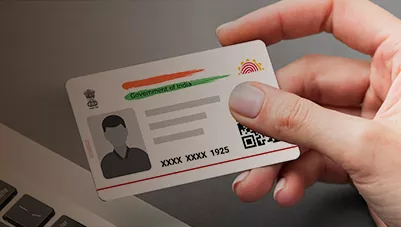
Aadhaar masking is the process of hiding the first eight digits of an Aadhaar number while displaying only the last four digits.
For example:
Original Aadhaar Number: 1234 5678 9012
Masked Aadhaar Number: XXXX XXXX 9012
The masked version allows organizations to verify identity without exposing the complete Aadhaar number to employees, third-party vendors, or unauthorized systems.
For financial institutions handling thousands of customer documents daily, Aadhaar masking serves as a critical layer of privacy protection during onboarding, verification, document processing, and record management.
Why is Aadhaar Masking Important for BFSI, NBFCs, and Fintech Companies?
Financial institutions process large volumes of personally identifiable information (PII) every day. Aadhaar numbers are among the most sensitive pieces of customer data because they are frequently used across multiple services and platforms.
Implementing Aadhaar masking helps organizations:
Protect Customer Privacy
Customers increasingly expect businesses to handle their personal information responsibly. Masking reduces unnecessary exposure of Aadhaar data during internal workflows.
Reduce Data Breach Risks
Even if documents are accessed by unauthorized personnel, masked Aadhaar numbers limit the potential misuse of sensitive information.
Support Compliance Requirements
Data protection frameworks emphasize collecting only the information necessary for a business purpose. Aadhaar masking aligns with privacy-by-design principles and responsible data handling practices.
Build Customer Trust
Privacy-conscious customers are more likely to engage with organizations that demonstrate strong data protection measures.
Enable Safer Digital Workflows
Whether documents move through underwriting, verification, compliance checks, or customer support systems, masking ensures that sensitive information remains protected throughout the lifecycle.
This is particularly relevant for organizations focused on Aadhaar privacy banking initiatives and digital-first financial services.
For a comprehensive understanding of Aadhaar masking, including privacy protection, compliance considerations, secure document sharing, industry use cases, and implementation strategies, explore our Complete Guide to Aadhaar Masking in 2026.
Who Should Implement Aadhaar Masking?
Aadhaar masking is beneficial for any organization handling Aadhaar documents during customer verification processes.
Banks
Retail banks process Aadhaar information during account opening, loan applications, credit card issuance, and customer verification.
NBFCs
Non-Banking Financial Companies handle large-scale onboarding for lending, vehicle financing, personal loans, and microfinance operations.
Fintech Companies
Digital lenders, neobanks, investment platforms, payment providers, and insurtech companies often rely on fully digital onboarding journeys.
Implementing Aadhaar masking for fintech platforms helps protect customer data while maintaining fast and seamless onboarding experiences.
Insurance Providers
Insurance onboarding and claims processing frequently require identity verification documents that contain Aadhaar information.
Third-Party KYC and Verification Providers
Organizations offering OCR, eKYC, document verification, and onboarding solutions should integrate automated masking capabilities into their workflows.
When Should Aadhaar Masking Be Applied?
One common mistake is masking Aadhaar information only after documents have already been stored.
Best practice is to apply masking as early as possible in the document lifecycle.
During Customer Onboarding
As soon as Aadhaar documents are uploaded, masking should be performed before documents enter operational systems.
During OCR Processing
When extracting Aadhaar details using OCR technology, organizations should automatically identify and mask sensitive fields before storing or sharing documents.
Before Internal Distribution
Documents sent to underwriting, compliance, operations, or support teams should contain masked Aadhaar information whenever full visibility is not required.
Before Third-Party Sharing
If customer documents are shared with external vendors, partners, or service providers, masked versions should be used whenever possible.
During Archival and Storage
Historical records should also be protected using masking policies to reduce long-term exposure risks.
Where Should Aadhaar Masking Be Implemented?
Aadhaar masking should not be treated as a standalone compliance task. Instead, it should be embedded across all customer onboarding and document processing systems.
Key implementation areas include:
Customer Onboarding Portals
Documents uploaded through websites and mobile applications should be automatically masked.
Video KYC Platforms
Aadhaar documents captured during Video KYC workflows should pass through automated masking processes.
Document Management Systems
Stored customer records should contain protected versions of Aadhaar documents.
Loan Origination Systems
Lending platforms should ensure Aadhaar information remains protected throughout the approval journey.
OCR and Verification Platforms
Identity verification systems should include built-in masking capabilities to prevent unnecessary exposure of sensitive information.
These measures collectively strengthen secure customer onboarding processes across financial institutions.
To discover how organizations implement real-time Aadhaar masking across onboarding platforms, document management systems, verification workflows, and enterprise applications, read Real-Time Aadhaar Masking for Enterprise Workflows.
How Can BFSI, NBFCs, and Fintech Companies Implement Aadhaar Masking Effectively?
Successful Aadhaar masking requires more than manually hiding numbers. Modern organizations should adopt automated, scalable, and policy-driven approaches.
1. Automate Masking Using AI-Powered OCR
Manual masking is time-consuming and prone to human error.
AI-powered OCR solutions can automatically:
- Detect Aadhaar documents
- Identify Aadhaar numbers
- Locate sensitive information
- Apply masking instantly
- Process large document volumes efficiently
Automation significantly improves accuracy and operational efficiency.
2. Follow the Principle of Least Exposure
Only employees who genuinely require access to complete Aadhaar information should be allowed to view it.
Everyone else should work with masked versions.
This minimizes internal data exposure risks.
3. Implement Role-Based Access Controls
Different teams require different levels of document visibility.
Role-based access ensures that sensitive Aadhaar information remains accessible only to authorized personnel.
4. Secure Data Storage and Transmission
Masking should complement other security measures such as:
- Encryption
- Access controls
- Audit logging
- Secure APIs
- Data retention policies
A layered security strategy offers stronger protection.
5. Maintain Audit Trails
Organizations should track:
- Who accessed Aadhaar documents
- When documents were viewed
- Whether documents were modified
- How data was shared
Comprehensive audit logs improve accountability and compliance readiness.
6. Regularly Review Privacy Policies
Privacy requirements continue to evolve alongside digital transformation initiatives.
Organizations should periodically evaluate:
- Data collection practices
- Storage policies
- Access permissions
- Masking effectiveness
- Vendor security controls
Continuous improvement helps maintain long-term compliance and customer trust.
Common Aadhaar Masking Challenges and How to Overcome Them
Challenge: High Document Volumes
Large financial institutions process thousands of documents daily.
Solution: Deploy automated OCR-based masking systems capable of real-time processing.
Challenge: Multiple Document Formats
Customers submit Aadhaar documents as PDFs, images, screenshots, and scanned copies.
Solution: Use AI-based document processing solutions that support diverse formats.
Challenge: Legacy Systems
Older onboarding systems may lack native masking functionality.
Solution: Integrate dedicated masking APIs or document processing platforms into existing workflows.
Challenge: Balancing Privacy and User Experience
Organizations want stronger privacy without creating onboarding friction.
Solution: Implement automated masking in the background so customers experience a seamless verification journey.
Conclusion
As digital financial services continue to expand, protecting customer identity information has become a business necessity rather than a compliance checkbox. Aadhaar masking helps banks, NBFCs, and fintech companies reduce data exposure, strengthen privacy controls, and build customer trust throughout the onboarding lifecycle.
By implementing automated masking, restricting unnecessary access, securing document workflows, and embedding privacy into onboarding systems, organizations can create safer and more efficient customer experiences.
For businesses focused on Aadhaar masking for fintech, enhancing Aadhaar privacy banking practices, and delivering secure customer onboarding, Aadhaar masking should be considered a foundational component of modern identity verification and document management strategies.
Turn Aadhaar Privacy into a Competitive Advantage
Customer trust starts with responsible data handling. Automate Aadhaar masking across onboarding, KYC, lending, insurance, and verification workflows to reduce compliance risks, protect sensitive information, and improve operational efficiency without adding manual effort.
Talk to our experts today and discover how AI-powered Aadhaar masking can help your organization process documents faster, safer, and at enterprise scale.


Top Posts
- What Is Masked Aadhaar?
- Why Is Masked Aadhaar Important?
- Why Did UIDAI Introduce Masked Aadhaar?
- Is Masked Aadhaar Legally Valid?
- When Should Aadhaar Masking Be Used?
- How Does Aadhaar Masking Improve Privacy and Compliance?
- How Businesses Automate Aadhaar Masking?
- Frequently Asked Questions
- Conclusion
- Protect Aadhaar Data While Simplifying Identity Verification