
AI vs Rule-Based Aadhaar Masking: Which Approach Delivers Better Accuracy?
Aadhaar masking can be powered by predefined rules or advanced AI technologies such as OCR and contextual document analysis. This blog compares both approaches and examines how they perform across different document conditions, accuracy requirements and enterprise workflows.
AI or rule-based Aadhaar masking which delivers better accuracy? Explore AI detection, pattern recognition, OCR comparison, edge-case handling and accuracy benchmarks to understand which approach is best for enterprise document processing.
What Is Aadhaar Masking?
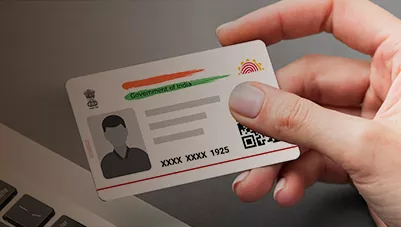
Aadhaar masking is the process of hiding sensitive digits of an Aadhaar number while retaining only the information required for identification or business purposes.
A typical masked Aadhaar format displays the last four digits while masking the first eight digits:
XXXX-XXXX-1234
For enterprises, automated masking can be integrated into KYC, onboarding, document management, customer service and other workflows.
The accuracy of the masking process depends on two important capabilities:
- 1.Detecting the correct Aadhaar number
- 2.Masking the complete sensitive region without affecting required information
This is where the difference between AI-based and rule-based systems becomes important.
For a comprehensive overview of enterprise Aadhaar masking, explore our guide to Aadhaar masking implementation, security, AI and compliance.
What Is Rule-Based Aadhaar Masking?
Rule-based Aadhaar masking uses predefined instructions to identify and mask Aadhaar numbers.
A system may use:
Selecting the right solution helps organizations:
- *Fixed digit patterns
- *Regular expressions
- *Predefined document coordinates
- *Keyword matching
- *Number length
- *Formatting rules
For example, a rule-based system may search for a 12-digit number that follows a specific pattern and then mask it.
What Is AI-Based Aadhaar Masking?
AI-based Aadhaar masking uses artificial intelligence, machine learning, computer vision, OCR and contextual document analysis to detect sensitive information.
Instead of relying only on a fixed pattern, an AI system may analyse:
- *Document layout
- *Text location
- *Nearby labels
- *Number structure
- *Visual patterns
- *Document type
- *Image quality
- *Relationship between different document elements
Who Should Invest in Aadhaar Masking Software?
Accuracy is critical because both under-masking and over-masking can create operational problems.
Under-Masking
Under-masking occurs when sensitive information is not properly hidden.
- *Only some digits are masked.
- *The wrong Aadhaar number is processed.
- *A number is missed completely.
- *The original document remains accessible.
This can create privacy and security risks.
Over-Masking
Over-masking occurs when the system hides information that should remain visible.
- *Masking other reference numbers.
- *Covering customer details required for verification.
- *Hiding text outside the Aadhaar number.
- *Making the document difficult to use operationally.
An accurate masking system should therefore achieve two objectives:
Protect sensitive data while preserving necessary document information.
What Role Does Pattern Recognition Play?
Pattern recognition remains important in both AI and rule-based masking.
Aadhaar masking systems may use patterns such as:
- *Number length
- *Digit arrangement
- *Document location
- *Nearby text *Visual structure
The difference is how these patterns are interpreted.
Rule-Based Pattern Recognition
A rule-based system may follow a fixed instruction:
“If a 12-digit number is detected in a specific format, mask it.”
This can be effective for predictable documents.
AI-Based Pattern Recognition
An AI system may analyse several characteristics simultaneously:
“This number is located in the expected region, appears on a recognised Aadhaar document, matches the expected structure and is associated with relevant document context.”
This can help improve detection when documents are less predictable.
OCR Comparison: AI vs Rule-Based Processing
OCR plays a central role in document masking. However, OCR accuracy can be affected by:
- *Blurred images
- *Low resolution
- *Poor lighting
- *Document rotation
- *Shadows
- *Compression
- *Folded documents
- *Camera distortion
A rule-based system may fail if OCR produces unexpected output. For example, an OCR engine may misread:
- *0 as O
- *1 as I
- *8 as B
A rule-based system may not recognise the number if the extracted text does not match the exact expected pattern.
An AI-powered system can potentially combine OCR output with visual information and contextual analysis to improve interpretation.
This is one of the key areas where AI-based document processing can provide an advantage.
Which Approach Handles Edge Cases Better?
Real-world documents rarely arrive in perfect conditions.
This is where edge cases become important.
Examples include:
- *Cropped Aadhaar documents
- *Rotated images
- *Low-quality scans
- *Screenshots
- *Partial documents
- *Multiple identity documents in one image
- *Documents containing multiple long numbers
- *Unusual layouts
- *Images with shadows or glare
- *Handwritten annotations
- *Poor camera focus
Rule-Based Systems and Edge Cases
Rule-based systems can handle known variations if additional rules are created.
However, every new variation may require:
- *New rules
- *New exceptions
- *Additional testing
- *Ongoing maintenance
As the number of exceptions increases, the rule system can become more complex.
AI-Based Systems and Edge Cases
AI systems can potentially generalise across document variations if they have been properly trained and tested.
However, AI is not automatically accurate in every situation. It requires:
- *High-quality training data
- *Diverse document examples
- *Continuous testing
- *Monitoring
- *Human review for uncertain cases where necessary
The important question is not whether AI can handle every edge case perfectly. The real question is whether it can perform more consistently across a wider range of real-world inputs.
Accuracy Benchmarks: How Should Enterprises Measure Performance?
Enterprises should not select an Aadhaar masking solution based only on marketing claims such as “high accuracy.”
Instead, organisations should evaluate performance using measurable benchmarks.
1. Detection Accuracy
How often does the system correctly identify the Aadhaar number?
2. False Positive Rate
How often does the system incorrectly identify another number as an Aadhaar number?
A high false positive rate can result in unnecessary masking.
3. False Negative Rate
How often does the system fail to detect an Aadhaar number?
This is especially important from a privacy and security perspective.
4. Masking Accuracy
After detecting the Aadhaar number, does the system mask the correct digits?
A detection system may identify the correct number but still produce an inaccurate masking region.
5. Processing Speed
Accuracy is important, but enterprises should also evaluate how quickly documents can be processed.
A practical enterprise solution should balance:
Accuracy + Speed + Scalability + Security
Why a Hybrid Approach Can Be Effective
AI and rules do not necessarily need to compete.
A hybrid architecture can combine the strengths of both approaches.
For example:
AI Layer
Identifies the document type and locates possible Aadhaar numbers.
OCR Layer
Extracts text from the document.
Rule Layer
Applies known validation rules and masking requirements.
Confidence Layer
Assigns a confidence score to the detection.
Validation Layer
Checks whether the masking output is correct.
What Should Enterprises Consider Beyond Accuracy?
Accuracy is essential, but it is not the only factor.
Security
The solution should be evaluated for:
- *Data encryption
- *Secure transmission
- *Access control
- *Data retention
- *Logging
- *Processing architecture
Privacy
Organisations should understand:
- *Where documents are processed.
- *Whether copies are stored.
- *How long data is retained.
- *Who can access the information?
Integration
The solution should integrate with existing:
- *KYC platforms
- *Mobile applications
- *Web applications
- *Document management systems
- *Enterprise workflows
Scalability
A system that works for 1,000 documents may need to support millions of documents in the future.
Reliability
Enterprises should evaluate:
- *API availability
- *Processing failures
- *Error handling
- *Monitoring
- *Support infrastructure
Compliance
Aadhaar masking should form part of a broader privacy and security strategy. Masking alone does not replace other organisational responsibilities related to personal data protection.
Learn more about how Aadhaar masking APIs integrate with existing KYC and document management systems to automate document protection.
The Future of AI-Powered Aadhaar Masking
The future of Aadhaar masking is likely to involve increasingly intelligent document processing systems.
Emerging capabilities may include:
Context-Aware Document Detection
Systems will understand the relationship between document type, text and visual layout.
Real-Time Masking
Aadhaar numbers may be masked immediately during document capture.
Confidence-Based Workflows
High-confidence results may be processed automatically, while uncertain cases may be flagged for review.
Multimodal AI
Systems may combine text, visual and structural information for improved document understanding.
Privacy-Focused Processing
Enterprises may increasingly evaluate on-device and privacy-preserving processing architectures.
API-First Integration
Aadhaar masking will increasingly become an integrated component of KYC and document workflows rather than a separate manual activity.
Conclusion
The debate between AI and rule-based Aadhaar masking is not simply about choosing newer technology over traditional methods. The real question is how accurately, consistently and securely a solution can identify and mask sensitive Aadhaar information across real-world document conditions.
Rule-based systems can work effectively in controlled environments with predictable inputs. However, AI-based solutions can provide greater flexibility when enterprises process varied documents, poor-quality images and complex edge cases.
Protect Aadhaar Data with AI-Powered Masking
See how secure, scalable Aadhaar masking software can fit into your enterprise workflows.



Top Posts
- What Is Aadhaar Masking?
- What Is Rule-Based Aadhaar Masking?
- What Is AI-Based Aadhaar Masking?
- Why Does Accuracy Matter in Aadhaar Masking?
- What Role Does Pattern Recognition Play?
- OCR Comparison: AI vs Rule-Based Processing
- Which Approach Handles Edge Cases Better?
- Accuracy Benchmarks: How Should Enterprises Measure Performance?
- Why a Hybrid Approach Can Be Effective
- What Should Enterprises Consider Beyond Accuracy?
- The Future of AI-Powered Aadhaar Masking
- Conclusion