Aadhaar Masking Vendor Checklist: 25 Questions to Ask Before You Buy
Choosing an Aadhaar masking vendor is a compliance decision as much as a technology purchase. The provider you select will process some of the most sensitive identity documents your organization holds, and any missed digit or unmasked QR code becomes your liability, not theirs. Yet many procurement teams still compare vendors on price and a short demo using a handful of clean sample cards.
This aadhaar masking vendor checklist gives CTOs, compliance officers and procurement teams 25 practical questions to ask before signing a contract. The questions are grouped into five areas: accuracy, security and compliance, deployment and integration, scalability and performance, and support and commercials. Use them in RFPs, demo calls and proof-of-concept evaluations to separate a production-ready aadhar masking solution from one that only works on paper.
Why You Need a Structured Vendor Checklist
UIDAI guidelines require organizations that store Aadhaar copies to mask the first eight digits of the Aadhaar number and make sure the QR code cannot reveal the full number. The Digital Personal Data Protection Act adds accountability for how personal data is processed, stored and audited. When you outsource masking to a vendor, you remain the data fiduciary and must be able to show regulators that the vendor's process is reliable.
A structured checklist helps in three ways. It forces every vendor to answer the same questions, so comparisons are fair. It surfaces gaps early, before integration work begins. And it creates a written record of due diligence that supports internal audits later. Before you start, it also helps to understand the top features to look for in Aadhaar masking software, so your team knows what good looks like.
Section 1: Accuracy and Detection (Questions 1 to 6)
Accuracy is the foundation of any masking system. A vendor that masks 99 documents correctly and misses the hundredth still leaves you with a compliance breach. Focus on how the vendor measures and proves accuracy on real-world documents, not on marketing claims.
- What is your detection recall on real-world Aadhaar documents, and how was it measured? Ask for recall (the share of Aadhaar numbers correctly found) rather than generic "accuracy". Request details on the test set size, document types and image quality used.
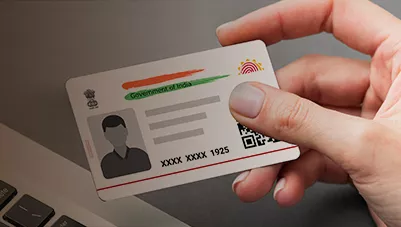
- Do you mask the QR code as well as the Aadhaar number? The QR code on Aadhaar cards and e-Aadhaar PDFs contains identity data. A solution that masks digits but leaves the QR code readable is not compliant.
- Which document formats and variants do you support? Check coverage for physical card scans, mobile photos, e-Aadhaar PDFs, mAadhaar screenshots, old and new card layouts, regional-language versions and multi-page PDFs where Aadhaar appears on an inner page.
- How do you handle poor-quality inputs? Real uploads include blurred, rotated, skewed, low-light and partially cropped images, as well as photos with stamps or signatures over the digits. Ask how performance drops on these and what happens when detection fails.
- How do you avoid false positives? A good engine validates numbers using the Verhoeff checksum and layout context so it does not mask phone numbers, account numbers or other 12-digit strings unnecessarily.
- Will you run a proof of concept on our own sample documents? The most reliable test is your own data. A confident vendor will benchmark against a representative sample and share per-document results, including misses.
Section 2: Security and Compliance (Questions 7 to 12)
Your masking vendor will see full, unmasked Aadhaar numbers before it masks them. That makes its security posture just as important as its accuracy. These questions help you judge whether the vendor can be trusted with sensitive identity data.
- Do you store original documents, and if so, for how long? The safest answer is that originals are processed in memory and never persisted. If temporary storage is used, ask about retention periods and deletion guarantees.
- How is data encrypted in transit and at rest? Expect TLS 1.2 or higher for API traffic and strong encryption for any stored data, along with clear key management practices.
- Where is data processed and stored? For many regulated sectors, data must stay within India. Confirm the location of data centres, backups and any sub-processors.
- What certifications and audits do you hold? Ask for ISO 27001, SOC 2 or equivalent reports, along with recent penetration test summaries and vulnerability management processes.
- What audit logs do you provide? You should receive per-document records showing what was detected, what was masked, confidence scores, timestamps and processing status, without storing the Aadhaar number itself in the logs.
- How does your solution support UIDAI and DPDP compliance? Look for documentation, data processing agreements and evidence you can share with auditors, rather than a generic statement that the product is "compliant".
Section 3: Deployment and Integration (Questions 13 to 17)
Even the most accurate masking engine fails if it cannot fit into your existing systems. These questions help you estimate integration effort and confirm the vendor can meet your infrastructure and data residency rules.
- Which deployment models do you offer? Check whether the vendor supports public cloud, private cloud and fully on-premise deployment. Banks, insurers and government bodies often require on-premise or air-gapped options.
- How easy is your Aadhaar Masking API to integrate? Review the API documentation, authentication methods, SDKs, sample code and sandbox environment. A well-designed Aadhaar Masking API should let developers send a document and receive a masked file plus structured metadata in a single call.
- Do you support both real-time and batch processing? You will likely need real-time masking for new customer uploads and bulk processing to clean up historical archives stored in document management systems, email or shared drives.
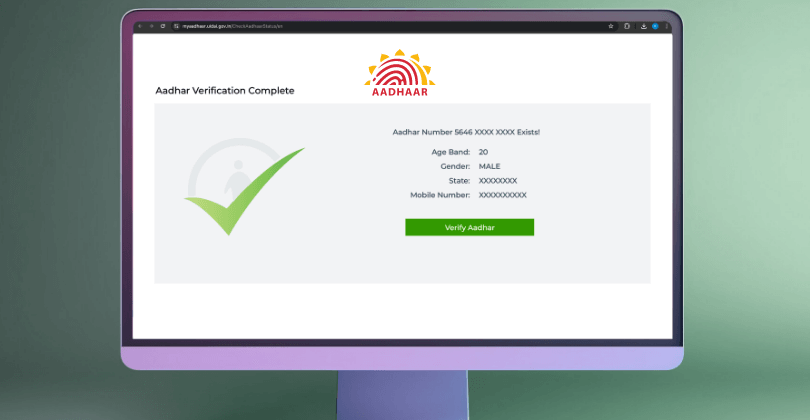
- Can your masking work alongside our Aadhaar verification API and KYC flow? An aadhaar verification api confirms identity, while masking protects the stored copy afterwards. Ask how the two connect so documents move from verification to masking to storage without manual steps.
- What output formats and options are available? Confirm that the vendor returns the same format you send (JPG, PNG, PDF), preserves image quality and lets you configure masking style, such as black boxes or "XXXX XXXX" overlays.
Section 4: Scalability and Performance (Questions 18 to 21)
Masking volumes tend to grow quickly once a solution goes live across onboarding, lending, HR and vendor management. Make sure the vendor can handle peak loads without slowing down your customer journeys.
- What is your average and peak processing latency per document? For real-time onboarding, a few seconds per document is usually acceptable. Ask for latency figures under load, not just for a single request.
- What throughput can you support, and how do you scale? Ask how many documents per minute or per day the platform handles, how it scales during spikes and whether rate limits apply.
- What uptime SLA do you offer? Look for a written availability commitment, typically 99.5 percent or higher, along with service credits and a public status page or incident reporting process.
- How do you handle low-confidence results? A mature solution flags uncertain documents for human review instead of silently passing them through. Ask whether the vendor provides a review queue or confidence scores you can route on.
Section 5: Support, Pricing and Vendor Stability (Questions 22 to 25)
A masking vendor is a long-term partner. Document formats change, regulations evolve and volumes grow. The final questions help you assess whether the vendor will still meet your needs in two or three years.
- What is your pricing model, and what is included? Clarify whether pricing is per document, per page or subscription-based, and whether QR masking, bulk processing, on-premise licensing and support are included or charged separately.
- What support do you provide during and after integration? Ask about onboarding assistance, dedicated account management, support hours, response times by severity and escalation paths.
- How often do you update your models, and how do you communicate changes? New document variants and edge cases appear regularly. A good vendor improves detection continuously and notifies customers of updates that might affect results.
- Which organizations in our sector already use your solution? References from banks, NBFCs, insurers or similar enterprises give you confidence that the vendor has handled comparable volumes, audits and security reviews.
How to Score and Compare Vendors
Collecting answers is only half the work. To turn this aadhaar masking vendor checklist into a decision, build a simple scoring matrix:
- Assign weights: Give the highest weight to accuracy and security, since failures in these areas create direct compliance exposure. Deployment, performance and commercials typically carry lower weights.
- Score each answer: Rate every question from 1 to 5 based on the evidence provided. Documented test results, certifications and written SLAs score higher than verbal assurances.
- Mark deal-breakers: Some answers should disqualify a vendor outright, such as no QR code masking, persistent storage of originals without controls, or data processed outside permitted regions.
- Validate with a proof of concept: Shortlist two or three vendors and run them on the same sample of your own documents. Compare recall, QR masking rate, false positives and the share of documents sent to manual review.
This approach keeps the evaluation objective and gives you a defensible record of why a particular vendor was chosen.
Red Flags to Watch For
During demos and RFP responses, watch for warning signs that a vendor may not be ready for enterprise use:
- Accuracy claims without any explanation of how they were measured
- Demos limited to clean, pre-selected sample cards
- Reluctance to run a proof of concept on your documents
- No QR code masking, or QR masking offered only as a paid add-on
- Vague answers about data storage, retention and processing location
- No audit logs, or logs that store the full Aadhaar number
- No written SLA or support commitments
Any one of these should prompt deeper questioning. Several together suggest the vendor is not the right fit for a regulated environment.
Conclusion
Buying an Aadhaar masking solution is not just about finding software that hides eight digits. It is about choosing a partner that will process sensitive identity data accurately, securely and at scale, while giving you the evidence you need to prove compliance. The 25 questions in this checklist cover the areas that matter most: detection accuracy, QR handling, data security, deployment flexibility, performance, support and long-term stability.
Use the checklist in your next RFP, insist on a proof of concept with your own documents and score vendors on evidence rather than promises. The extra effort during evaluation will save months of rework and reduce compliance risk for years to come.
Put Our Aadhaar Masking Solution to the Test
We welcome every question on this checklist. Our Aadhaar masking platform is built for enterprises that need accurate, auditable and secure masking across every document channel.
- High-recall detection across scans, photos, e-Aadhaar PDFs and mAadhaar screenshots
- Automatic QR code masking included on every document
- Real-time Aadhaar Masking API and bulk processing for historical archives
- Cloud, private cloud and on-premise deployment with no persistent storage of originals
- Detailed audit logs to support UIDAI and DPDP compliance reviews
Request a Personalized Demo and run a proof of concept on your own documents to see how we answer all 25 questions.